
How Narrative Design Improves LBE VR Experiences
The adoption of VR greatly depends on the quality of the experiences people find when they put on a headset.
A strong VR project must attract users, hold their attention, and make them feel comfortable inside an unfamiliar environment. This is especially important when an experience is designed for a broad audience: some visitors may be entering VR for the first time, while others already know its conventions and expect something more ambitious.
Many cultural VR experiences, such as museums, solve this challenge by limiting interaction. The user observes a scene, listens to a story, or follows a relatively predictable route. This approach makes the experience accessible, but it does not fit every creative goal.
Sometimes the task is to create something much more dynamic: an experience with action, unexpected events, emotional tension, and moments that genuinely surprise the user.
The more freedom and intensity an experience offers, however, the more opportunities there are for something to go wrong. A user may walk in the wrong direction, miss an important event, misunderstand what is expected, or simply stop moving because they are unsure what to do next. Traditional interface prompts can help, but they can also break immersion and make a carefully created virtual world feel like a software tutorial.
Turning Navigation Into Part of the Story
In one of our current VR projects, we approached this problem through narrative design rather than conventional onboarding. Launching in Amsterdam, the Netherlands, in 2026, the experience is a new action-adventure VR attraction designed for fearless visitors looking for something more intense than a traditional static VR experience. We can’t tease the details yet, but we’re thrilled to tell you about our narrative design solutions.
The project is being created by JetStyle in collaboration with The VR Boys. Together, we develop LBE experience across Europe.
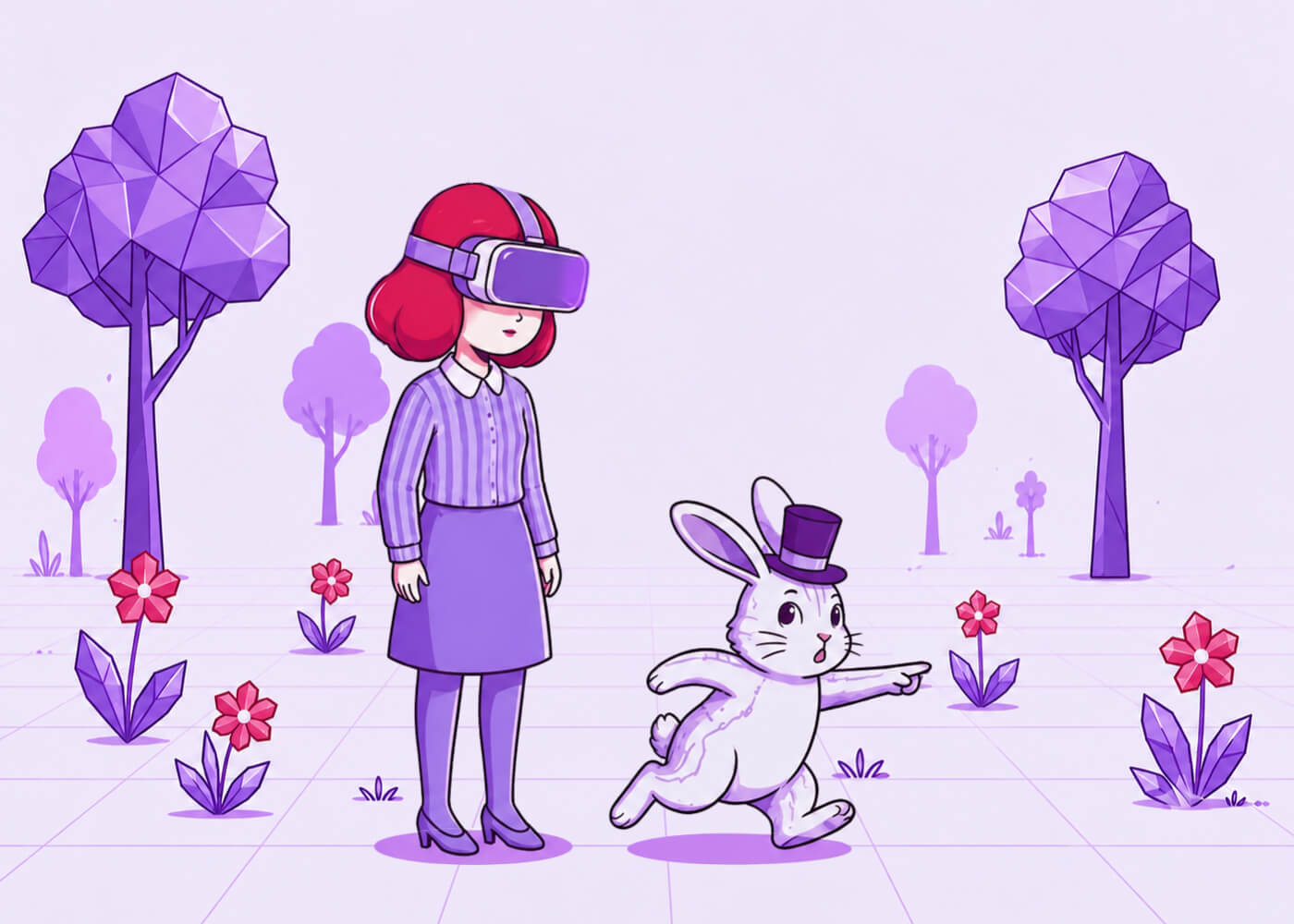
For this VR experience, we introduced an assistant character whose role exists naturally within the world of the experience. From the user’s perspective, this character belongs to the story. From the design perspective, the assistant performs several critical functions: directing attention, guiding the user through the environment, preventing long pauses, and helping the experience maintain its intended pace.
Instead of displaying an arrow or a message telling the user where to go, the world itself responds through the character.
This required close coordination between narrative design, game design, level design, animation, and development. The assistant had to appear at the right moment, communicate without becoming irritating, and provide enough guidance without making the user feel controlled.
The result is a way to combine a structured scenario with the feeling that the user is actively participating in events.
This approach is particularly valuable for dynamic non-game VR experiences. They need some of the engagement techniques used in games, but their audiences may not understand gaming conventions or have enough time to learn complex controls. Guidance therefore has to be intuitive, contextual, and almost invisible.
A Practical Future Role for AI in VR
Today, Generative AI can produce dialogue, but a reliable VR guide needs more than language.
This AI assistant must understand where the user is, what is happening in the environment, which events have already occurred, and whether the user is engaged, confused, or simply exploring. It must also react quickly enough to feel like part of the world rather than a remote chatbot.
As spatially aware AI agents become faster and more practical, immersive guides could become one of their most natural applications. Instead of following a fixed sequence, an assistant could adapt its behaviour to each session: offer help only when it is needed, respond to unexpected actions, and adjust the pace for first-time and experienced users.
Sessions from existing experiences could also provide valuable data for developing these systems. They show where people hesitate, what they overlook, and which interventions help them continue without disrupting immersion.
The technology is not yet the simplest or most cost-effective solution for every project. But we already see the potential for its implementation.
VR Designed Around Human Behaviour
Real engagement does not happen by accident. It comes from observing user behaviour, testing assumptions, and refining the experience around how people actually move, react, and make decisions in VR.
That is what turns an impressive virtual environment into an experience people can confidently follow, complete, and remember.
Read more about how we design user-friendly VR experiences:
Designing VR As If It Were Everyone’s First Time
Five Design Decisions That Make VR More Inclusive
If you have an ambitious XR idea, let’s explore how interaction, narrative, and user guidance can turn it into an experience people will want to complete and remember. orders@jet.style