

Web Design for Blockchain: How to Create Digital Experiences for Web3 Products
Crypto and Web3 products create a unique challenge for designers: the technology behind them is often invisible.
Blockchains, smart contracts, liquidity pools, interoperability protocols, and privacy systems describe complex mechanisms rather than physical objects. Unlike many traditional products, there is no obvious visual representation of web3 products.
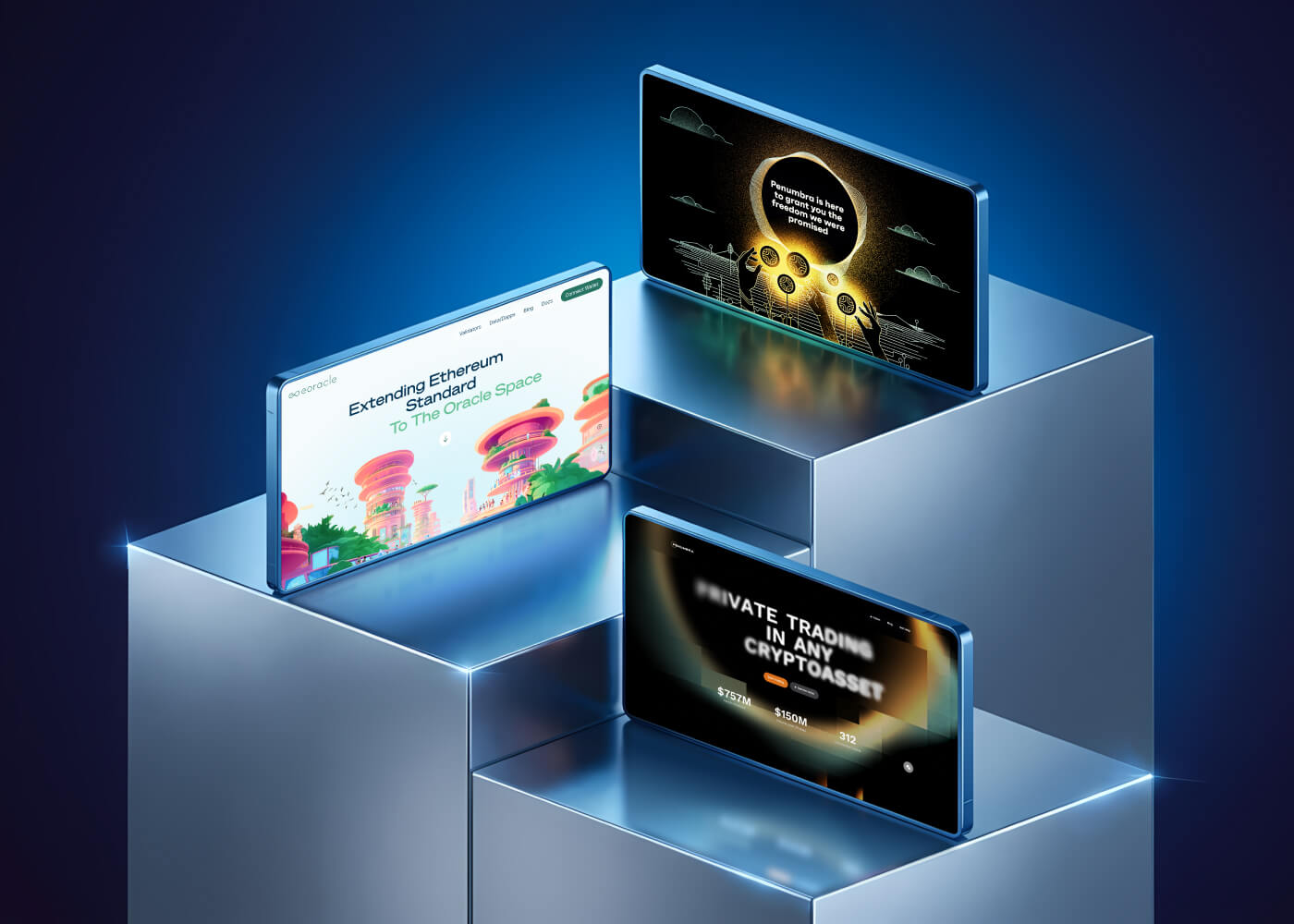
At JetStyle, we have designed digital experiences for Web3 companies, including Penumbra, a privacy-focused cross-chain network, and eOracle, a blockchain interoperability brand. These projects revealed a recurring challenge: how to transform complex technology into a visual language that helps users understand the product and recognize the brand.
Penumbra Website refresh Case study
Penumbra Airdrop Landing Page Case Study
Together with Kostya Ostro, JetStyle Art Director, we identified several principles that shape our approach to crypto design.
1. How to Visualize Abstract Blockchain Technology
When designers work with crypto products, the easiest solution is often to rely on familiar industry symbols.
A global network becomes a planet. Connections become glowing lines and nodes. Technology becomes dark backgrounds, gradients, and futuristic interfaces.
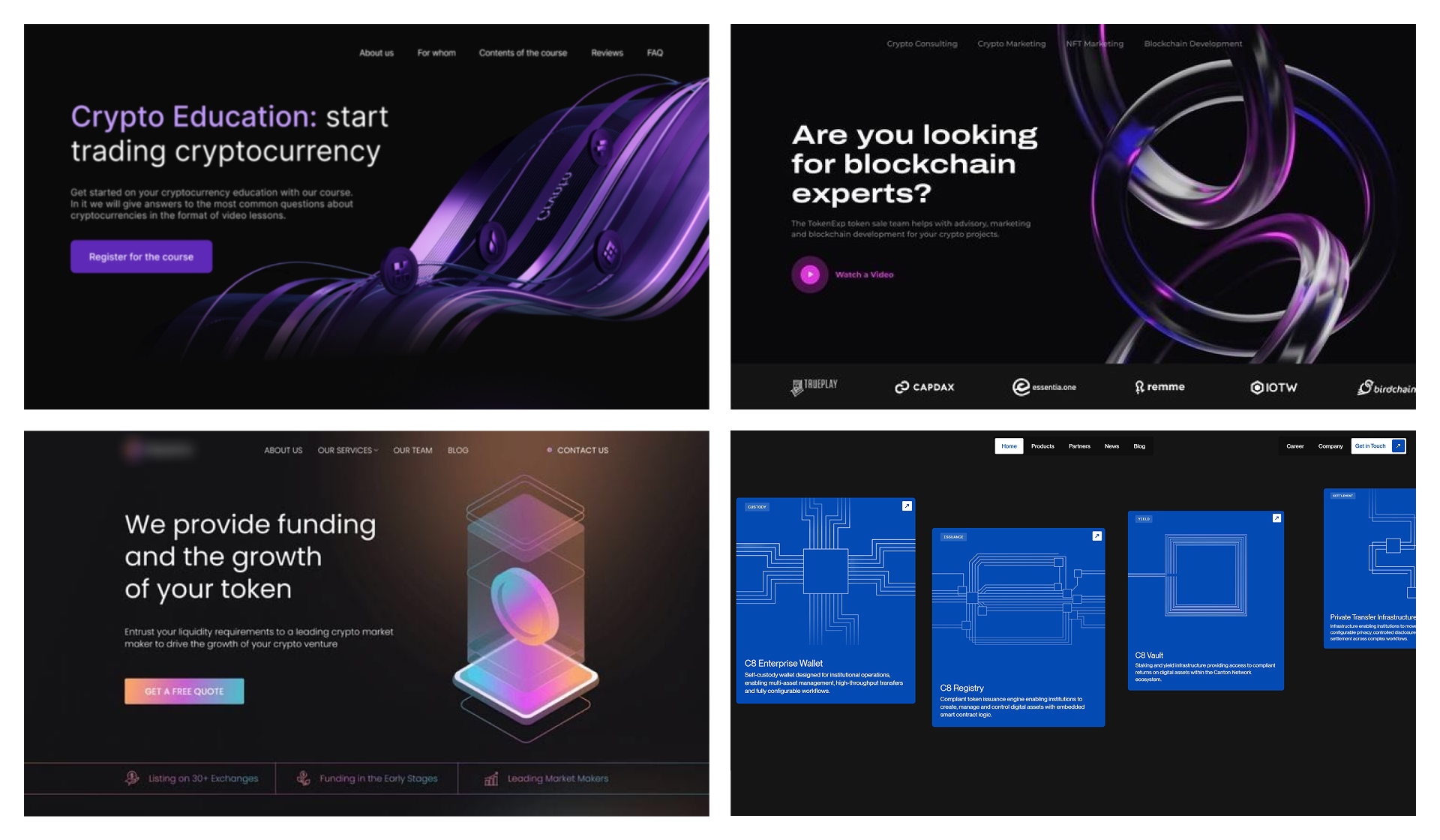
These references work because users already associate them with digital infrastructure. But they can also make different companies look increasingly similar.
As Kostya explains, crypto design has many visual shortcuts that are easy to follow: “The interesting design challenge is finding where a particular company can move beyond them.”
The key question is “What is unique about this product, its technology, and its values?”
For Penumbra, the answer came from the product itself. The network focuses on privacy, and the brand name refers to the partial shadow created during an eclipse.
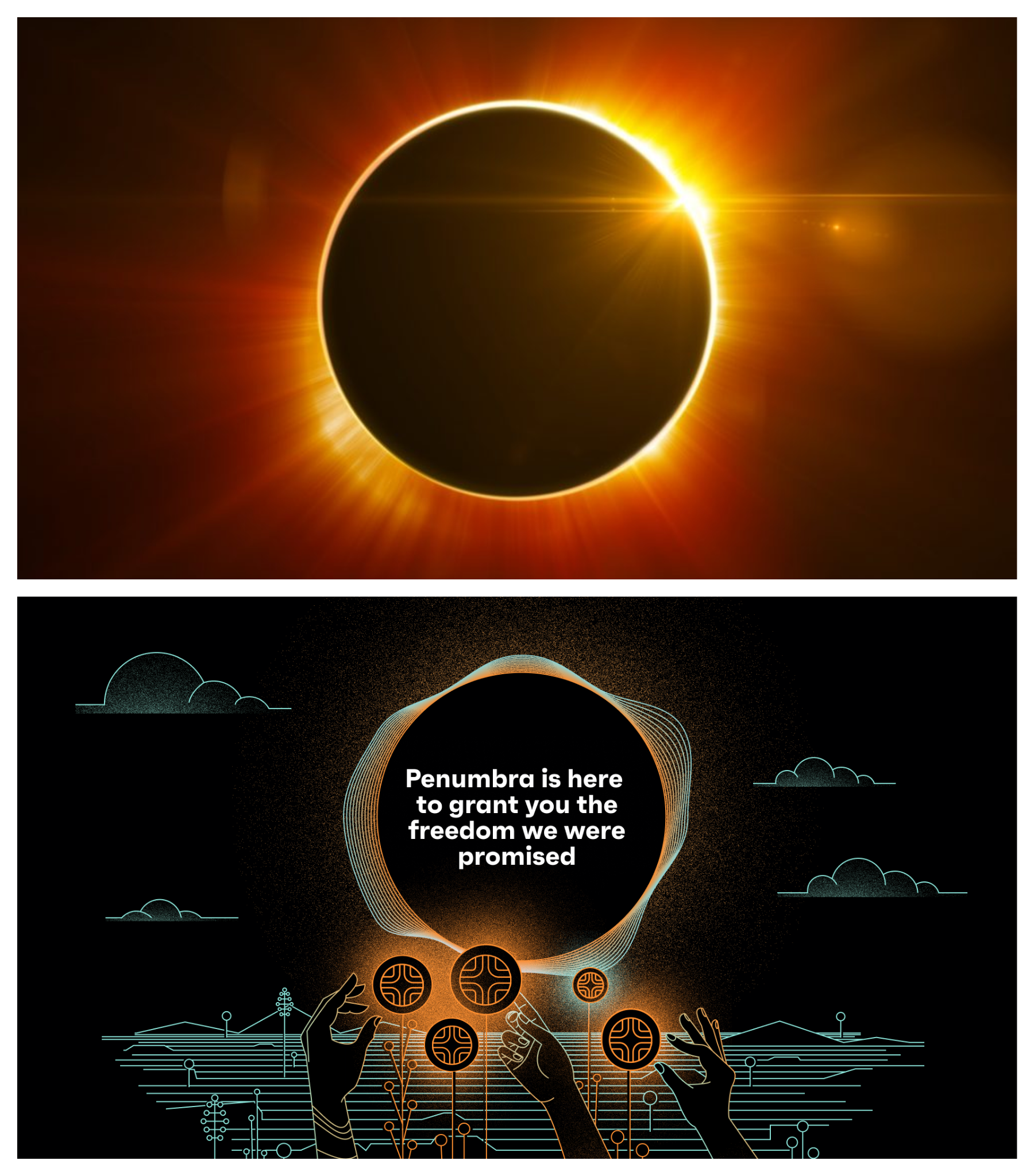
Instead of creating a generic blockchain aesthetic, we developed a visual language around shadows, blur, focus, and the relationship between visible and hidden information.
The imagery was intentionally multi-layered. Some elements reference an eclipse, while others resemble observations from telescopes looking into space. The contrast between sharp and blurred areas became a metaphor for privacy: important information remains visible, while sensitive details disappear.
2. How to Avoid Common Crypto Design Patterns
Many crypto products naturally want to communicate innovation and security. This often leads to similar visual decisions: dark interfaces, neon colors, abstract forms, glowing effects, and futuristic aesthetics.
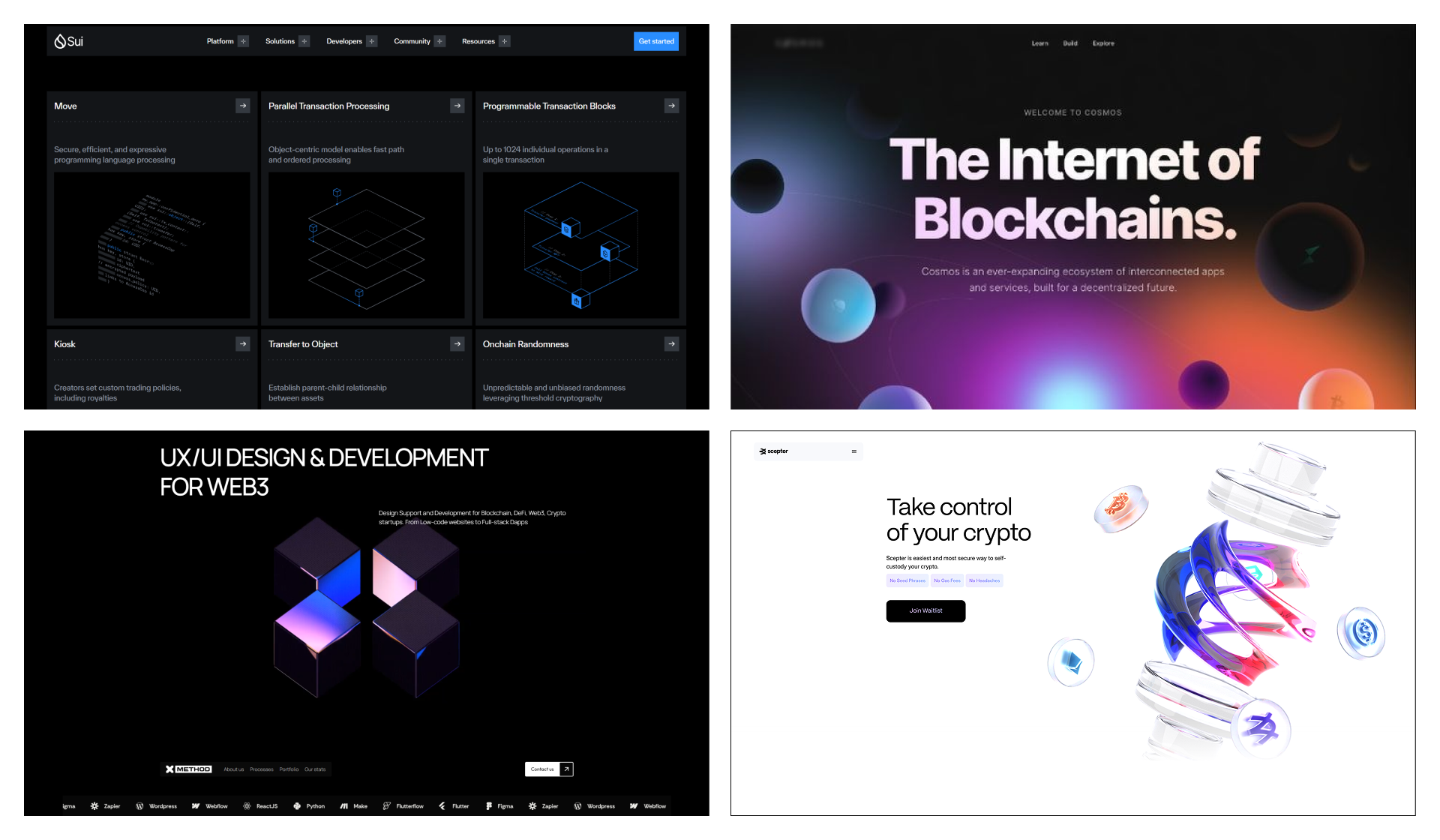
These elements can help users understand the category. But category recognition is only the first step. A strong Web3 brand also needs its own personality.
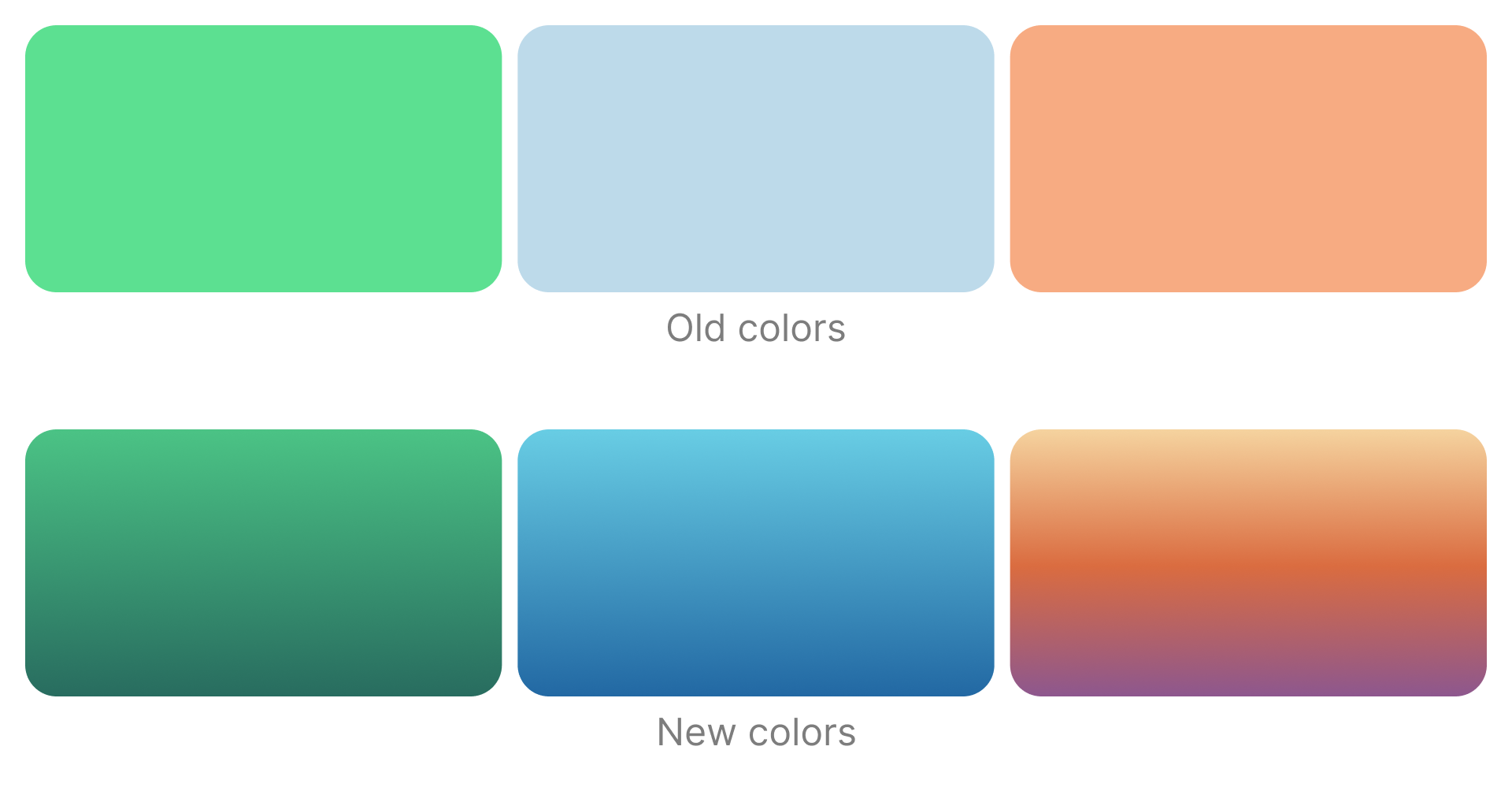
During the redesign of eOracle’s website, we worked on developing a visual direction that preserved the feeling of advanced technology while making the brand more distinctive and human.
The original palette already communicated reliability and technology, but the team wanted to express a more optimistic relationship between people and technology. We moved toward a brighter, more organic color direction and created illustrations that supported this idea.
That is why competitor research is an important part of our process. We analyze existing visual patterns to understand where they are useful — and where a company has an opportunity to create a more recognizable identity.
3. How Motion and Interaction Help Explain Complex Crypto Products
Crypto products often introduce concepts that are difficult even for experienced users.
Smart contracts, staking, liquidity, oracles, interoperability, and airdrops describe complex systems. Explaining them only through text can quickly turn a website into technical documentation.
Interaction design provides another way. Instead of asking users to understand everything immediately, animation and storytelling can gradually reveal how a system works.
While designing Penumbra’s campaign experiences, we used this approach to guide users through complex flows and create a clearer connection between actions, states, and outcomes.
This is why motion should not be treated as decoration added at the end of the design process.
A well-designed animation can:
- explain a transition or system state;
- guide attention toward important actions;
- reinforce a brand metaphor;
- make abstract concepts easier to understand.
For different projects, we use different tools depending on the goal: Lottie, Rive, WebGL shaders, and custom browser effects.
4. How Blockchain Design Projects Benefit from Product Mindset
Crypto projects often evolve quickly. Websites are connected to launches, conferences, campaigns, community activities, and changing product priorities.
Features can appear while design and development are already in progress. A product mindset helps teams move faster without losing consistency.
For eOracle, we developed a redesign concept first and then implemented it incrementally. Each sprint produced a usable result, allowing the team to continue improving the website while preparing for public launches. The MVP was launched two weeks after the project started and was ready for the team’s conference presentation.

Penumbra projects followed a similar approach, with short iterations and evolving requirements. The Penumbra team had a tight deadline, and we were eager to help them start the campaign on time. We worked in extremely short 3-day sprints and had regular calls; it was crucial to synchronize our vision and the results of work.
Read more about product development approach at JetStyle: https://jet.style/product-development
5. How AI and Technical Expertise Expand Creative Possibilities
Modern digital design increasingly happens at the intersection of creativity and technology. Designers who understand development possibilities — and use AI tools for experimentation — can explore solutions that would be difficult to achieve through static design alone.
AI-Augmented Design by JetStyle: https://jet.style/articles-ai
For Penumbra, we needed a specific glitch effect that matched the privacy concept behind the brand. Existing solutions did not fit the visual direction, so Kostya Ostro created a custom implementation himself, using ChatGPT to help with the development process.
Crypto design will continue to change together with the technology itself. For us, the most interesting challenge is not defining a particular Web3 aesthetic, but finding new ways to make complex systems visible, understandable, and engaging.