.webp)


Interactive VR/AR Concepts for Cultural Venues
VR/AR Ideas for Museums: Interactive Concepts for Cultural Venues
In part 1 of the series, we discussed how Extended Reality (XR), Virtual Reality (VR), and Augmented Reality (AR) can help cultural venues attract visitors, explain complex topics, and make museum experiences more memorable.
Below are eight VR/AR ideas for museums, inspired by JetStyle’s XR concept for Königsberg Cathedral and the 300th anniversary of Immanuel Kant. You can also explore the full concept as a separate case study on our website.
VR/AR idea for museums #1: philosophy in comics
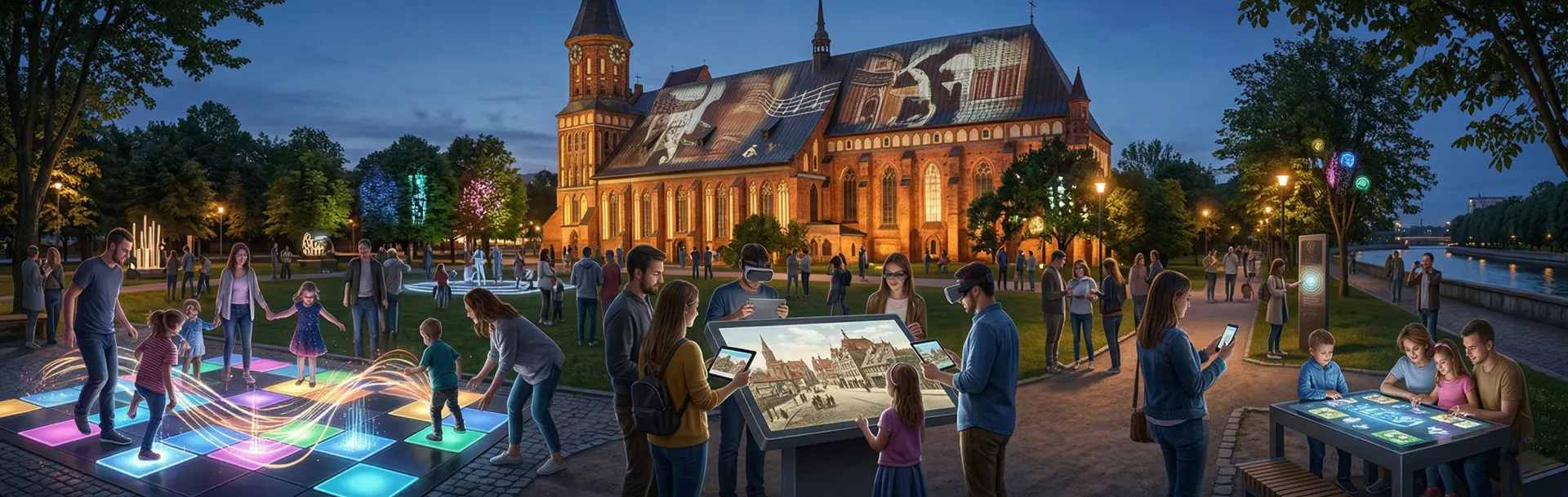
One way to make complex ideas more accessible is to turn them into a comic-style XR experience.
In this mechanic, Kant appears at each AR marker as a stylized character. He can explain one key idea in a few short lines, with speech bubbles, expressive animation, and optional voice-over. The tone can be serious, playful, manga-inspired, or superhero-like, depending on the museum’s audience and brand.
This mechanic helps visitors understand abstract ideas without reading long explanations. A comic-style AR scene is a visual explanation format. It makes philosophy feel lighter, faster, and easier to remember.
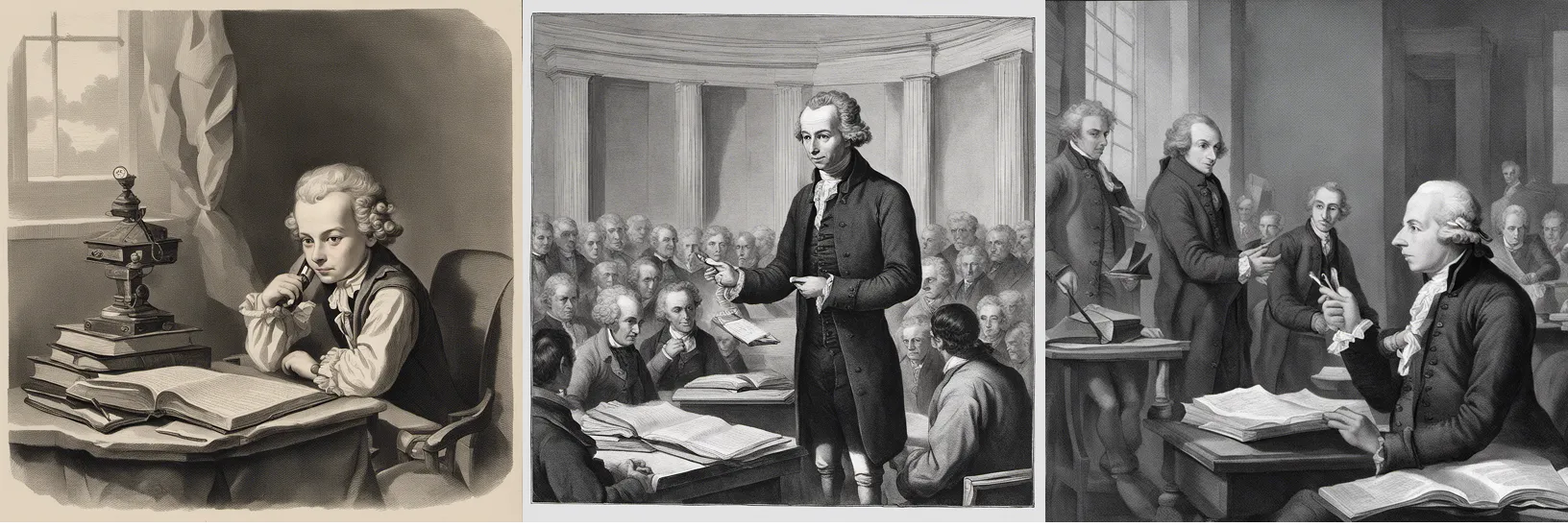
Another version of this idea is to show short animated episodes from Kant’s life. Visitors point their phone at a marker and see a quick scene: Kant teaching, writing, walking, or discussing an idea. Each scene becomes a small story.
For museums, this format works well when the subject is historically important but intellectually difficult. The AR comic becomes a bridge between the visitor and the topic.
VR/AR idea for museums #2: animated historical facts
Some museum stories work best as short visual facts.
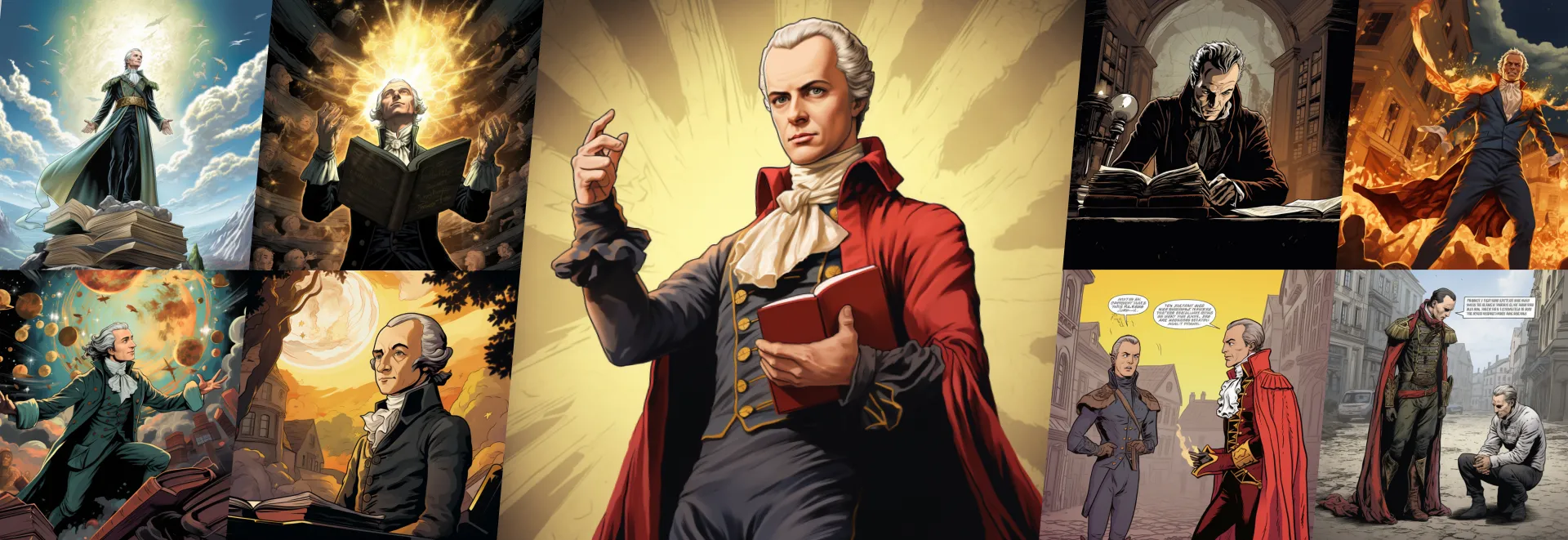
For example, Kant received his first professor’s salary many years after he started teaching. He bought his own house late in life. These details can be hard to remember if they appear only as text, but they become more memorable as animation.
An AR marker can trigger a simple scene: coins fall into Kant’s hands, then a small house appears behind him. In a few seconds, the visitor understands the fact and remembers the emotional meaning behind it.
This mechanic is flexible. It can turn biography, architecture, scientific discoveries, local legends, or archival details into fast visual moments.
An animated fact is a compact educational product. It gives the visitor one idea, one image, and one reason to continue the route.
VR/AR idea for museums #3: a historical figure here and now
A museum can use XR to make a historical figure feel present in the current moment.
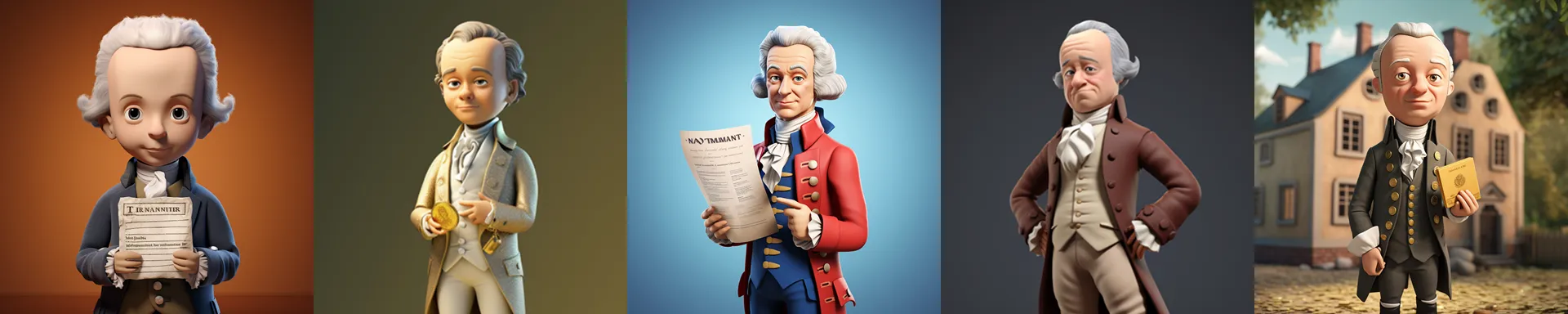
For the Kant concept, we imagined a mechanic based on the question: what would Immanuel Kant be doing right now?
Depending on the time of day, the AR experience shows what Kant might have been doing at that exact hour: walking, writing, lecturing, reading, or having dinner. The visitor opens a marker and sees a short scene connected to the real time of their visit.
This creates a stronger sense of presence. Kant is no longer only a name from a textbook. He becomes a person with habits, routines, and everyday moments.
For heritage sites, this mechanic can work especially well. It helps connect a historical figure to the location and makes the visitor feel closer to the past.
VR/AR idea for museums #4: AR portals into the past
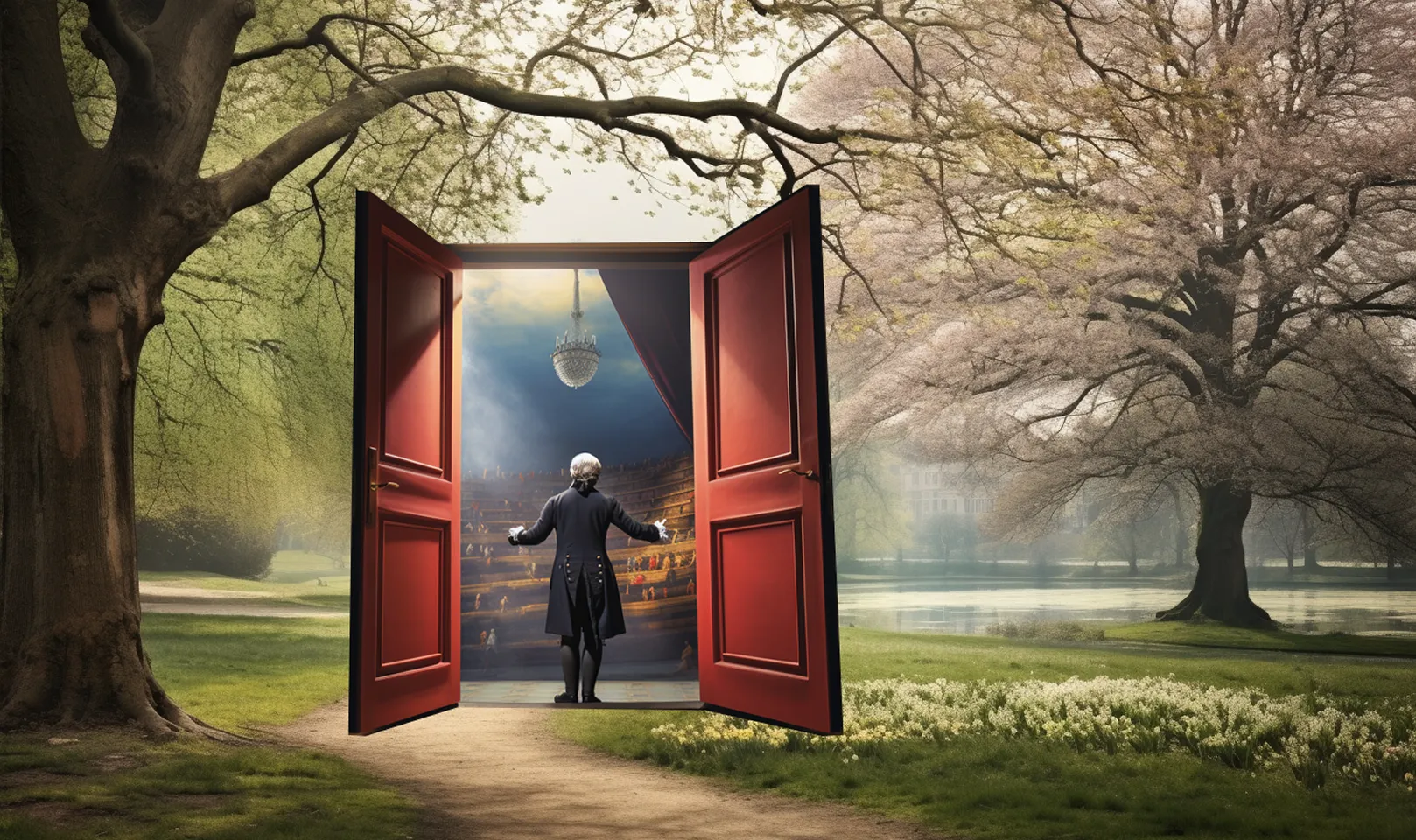
An AR portal can connect the current museum space with a historical reconstruction.
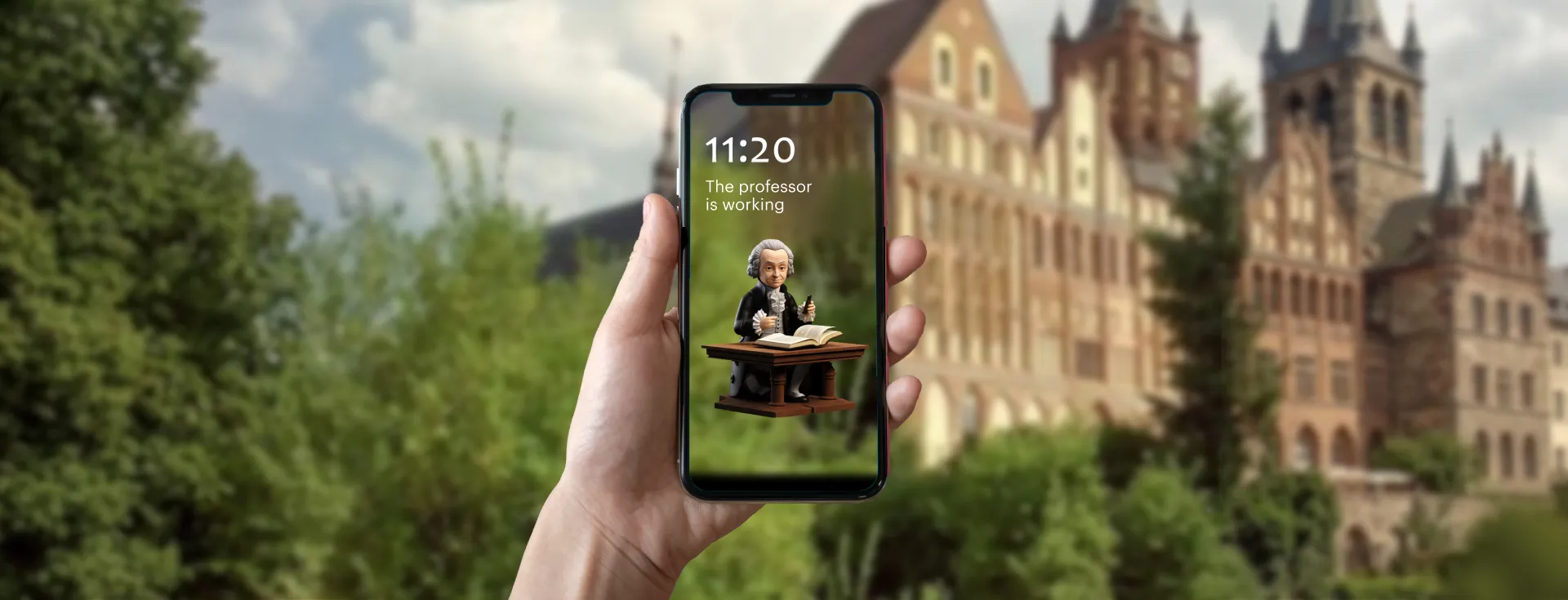
Physical door frames, posters, plaques, or printed markers can become portals into another time. When visitors scan a marker, they see a historical room, a classroom, a street, or the same location as it might have looked centuries ago.
For the Königsberg Cathedral concept, the portal could show a room where Kant lived, a classroom where he taught, or a version of the city from 300 years ago. A 3D Kant could walk through the space, pass by the viewer, or briefly turn toward them.
This mechanic is powerful for heritage locations because it connects the current place to its past. The visitor stands in a real location and sees another layer of time through the phone.
An AR portal is a spatial storytelling tool. It helps museums show what no longer exists physically.
VR/AR idea for museums #5: AR art objects
Not every XR experience needs a linear story. Sometimes one strong visual object is enough to create a memorable visitor moment.
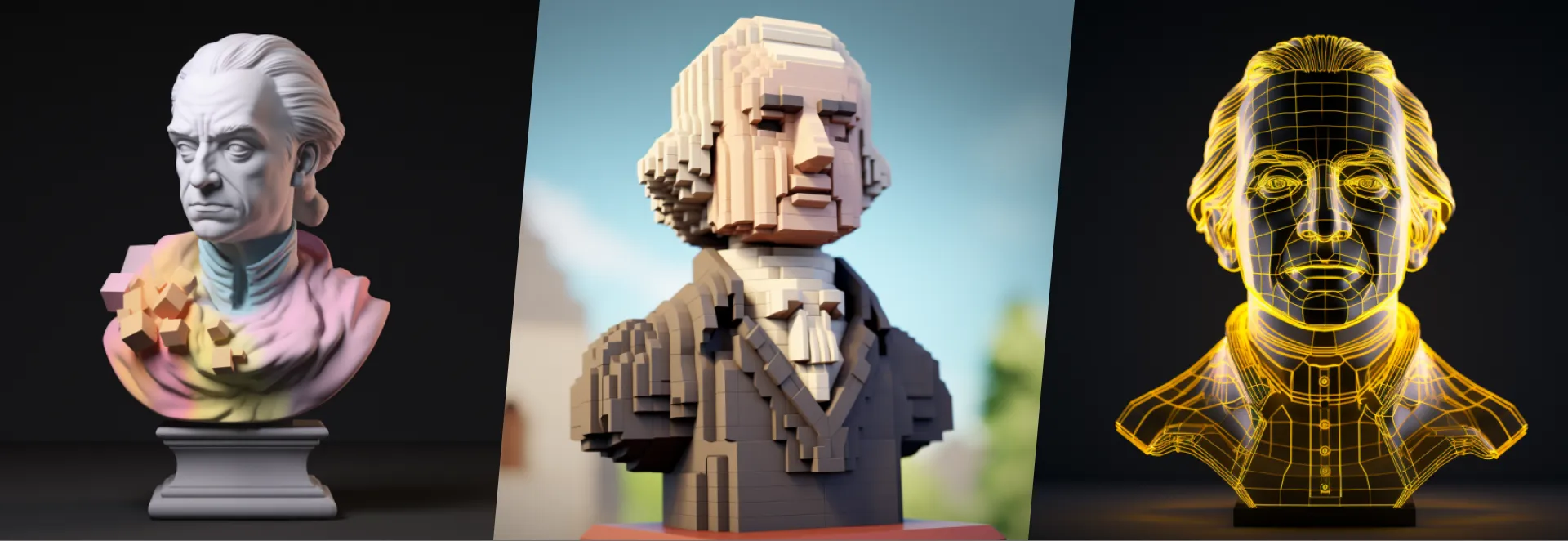
For the Kant concept, one idea was a large floating AR bust of Kant. It could appear in different visual styles: marble, brick, polygon mesh, primitives, or voxel-like blocks.
This type of AR object can become a photo moment, a visual anchor for the route, or a recognizable symbol of the experience.
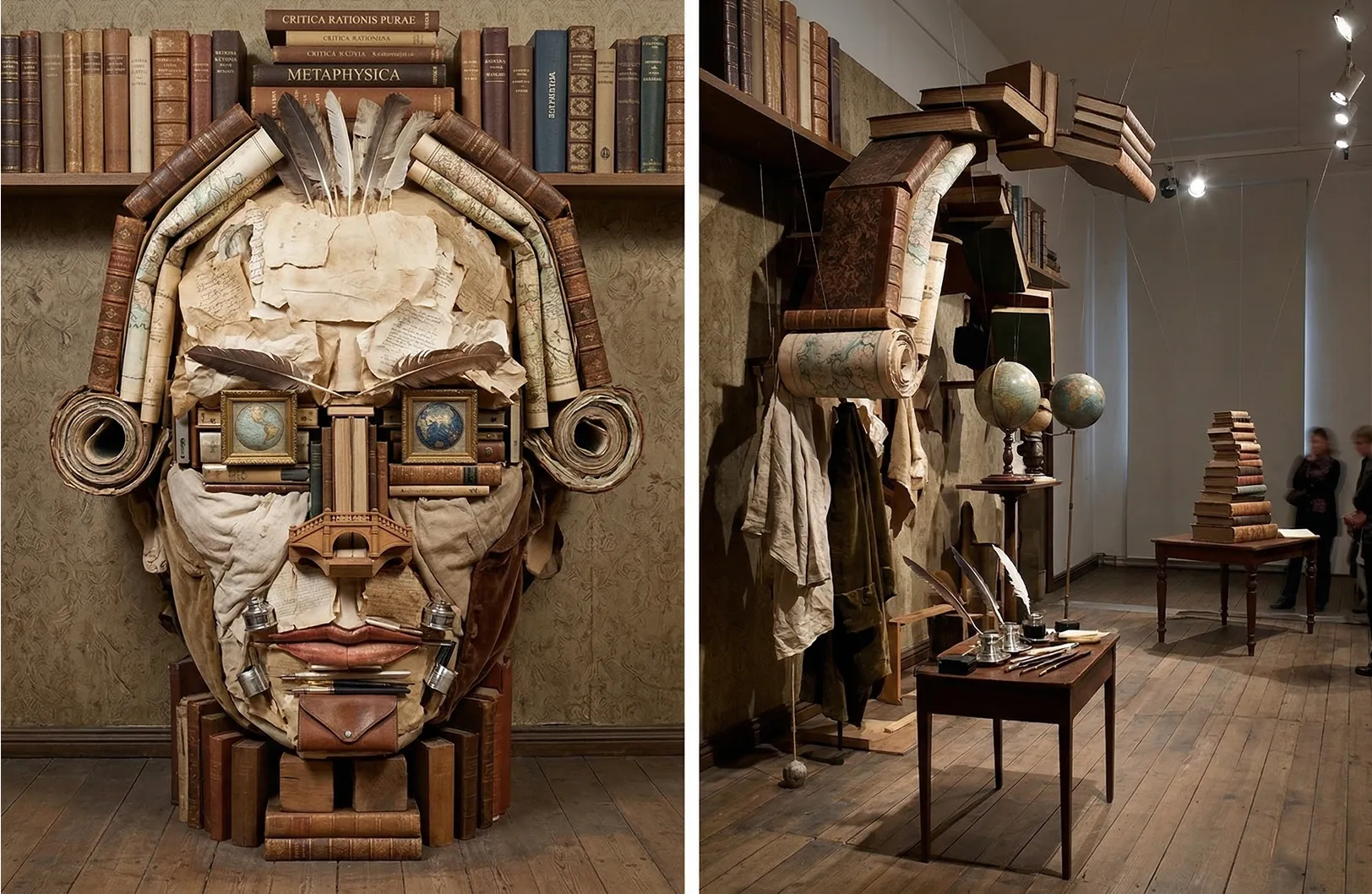
Another version of this mechanic is more immersive: the visitor sees Kant’s bust and receives a prompt to move closer. As they approach, the inside of the head opens into a panoramic world filled with objects related to Kant’s works, ideas, and biography. By rotating the phone, the visitor explores this inner universe.
This is a useful way to translate abstract thinking into something spatial. The AR object becomes a visual metaphor: the visitor looks inside a philosopher’s mind.
VR/AR idea for museums #6: gamified museum interaction
Even light game logic can make a museum route more engaging.
One possible mechanic is “find the right angle.” Visitors are invited to stand in a specific place and look at an AR object from the correct viewpoint. When they find the angle, a hidden image appears: for example, a portrait built from simple forms, together with one short philosophical thesis.
Another mechanic is “parts of life.” Different parts of an AR object represent different periods of Kant’s life. These parts can be connected to scanned 3D models of real museum items. When visitors tap an object, they see a short explanation and receive a prompt to find the physical item inside the museum.
This creates a bridge between the outdoor AR route and the physical exhibition. The digital layer does not replace the museum. It leads visitors deeper into it.
A gamified XR mechanic is an engagement tool. It gives visitors a reason to look closer, move through the space, and complete the experience.
VR/AR idea for museums #7: collect all AR markers
A simple progression layer can make almost any AR route stronger.
The interface can show how many markers the visitor has already found and how many are left. A small map can help them complete the route. Each marker becomes part of a larger journey.
For the Kant concept, five AR markers could represent five chapters of his life: childhood, education, teaching, major works, and legacy. These chapters can be tied to specific locations or assigned dynamically depending on the order in which the visitor scans them.
This keeps the experience structured but flexible. Visitors understand where they are in the route and what remains to explore.
A collectible AR route is a navigation product. It helps people move through a venue and gives them a clear sense of progress.
VR/AR idea for museums #8: quiz and shareable results
A museum XR experience can also include a light quiz.
Each AR marker can ask one short question about Kant’s philosophy, biography, or historical context. After completing all five points, the visitor receives a playful final result showing how close they are to Kant’s worldview.
The result can be shared on social media. This gives visitors something to take away from the experience and helps the museum reach new audiences.
A shareable result is a post-visit engagement tool. It turns the museum route into a conversation outside the venue.
For cultural institutions, this can be especially useful when the goal is to attract younger visitors, school groups, tourists, or people who do not usually engage with philosophy or history.
VR/AR souvenirs: how museum experiences can continue after the visit
Some XR mechanics can continue beyond the museum.
One option is to use a familiar image as a marker. For example, a widely known portrait of Kant can trigger AR content not only on site, but also in books, posters, printed guides, or online materials.
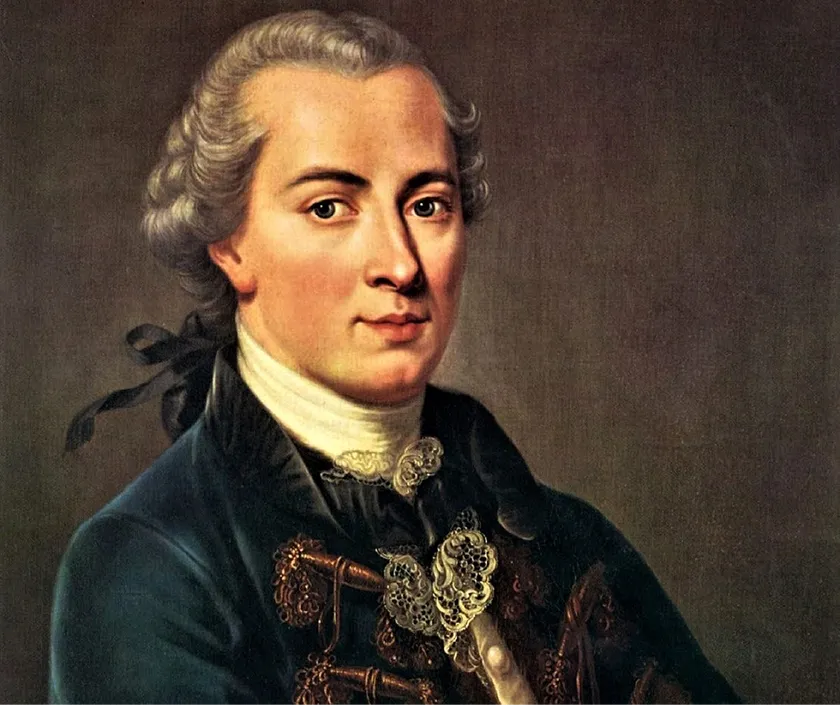
Another option is to create exclusive postcard markers. Visitors can buy a set of postcards and replay parts of the AR experience later at home. Each postcard becomes both a souvenir and an access point to digital content.
This extends the life of the museum visit. The experience does not end when the visitor leaves the location. It becomes something they can show to friends, family, students, or colleagues.
An XR souvenir is a retention product. It helps museums stay connected with visitors after the physical visit is over.
Let’s discuss an XR experience for your museum or venue
If you are exploring how to make your museum, heritage site, public space, or visitor attraction more engaging, JetStyle can help you choose the right XR mechanic.
We can estimate the concept, production scope, timeline, and budget for an AR route, interactive exhibit, digital character, gamified museum experience, historical reconstruction, or XR souvenir.
Write to us at orders@jet.style or book a call with JetStyle.