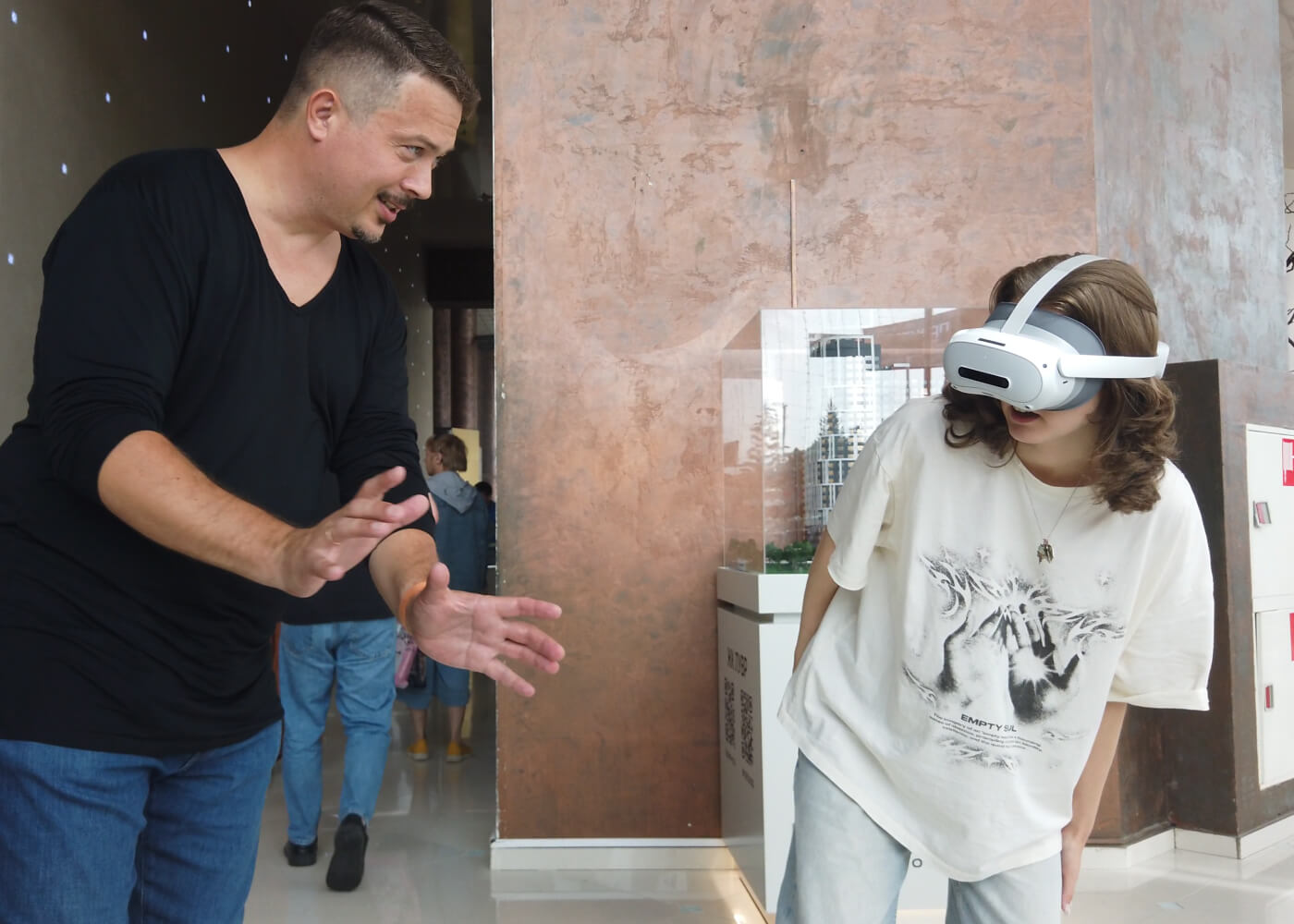

How VR/XR Changes Product Demonstrations at Trade Shows
Trade shows are still one of the most important places for B2B companies to meet customers, demonstrate products, and build business relationships.
But many companies face the same limitation: the exhibition space is always smaller than the product itself.
Traditional booths force companies to choose what to show and what to leave behind. Extended Reality (XR) removes this limitation.
A Booth Is Always Smaller Than Your Product
Exhibition booths are designed around physical constraints. Every additional square meter increases costs, logistics complexity, and preparation time.
Large equipment may require transportation, assembly, and significant floor space. Multiple product configurations may be impossible to demonstrate at once. Some services and digital products do not have a physical form at all.
As a result, companies often simplify their presentations. They rely on brochures, screens, videos, and static models — even when customers need a deeper understanding of the product XR creates another possibility: instead of bringing the product to the booth, bring the customer into the product.
A Virtual Space Without Physical Limits
Dream Booth XR is an XR tool designed for trade shows and sales demonstrations. It allows companies to showcase products of any scale inside a compact physical space.
A visitor can explore a large machine, walk through a construction system, examine complex components, or interact with a digital model, without requiring the real object to be present.
The booth remains small on the outside, while the virtual experience can contain objects and environments of almost any size.
This approach is especially useful for industries where products are difficult to transport, assemble, or explain through traditional materials.
An example how a whole production facility can be brought into one scene in 3D:
From Passive Presentation to Interactive Experience
A standard presentation usually follows one direction: a salesperson explains, and a visitor listens.
In XR, instead of looking at images or videos, prospects can explore products themselves. They can move around a model, examine details, see different configurations, and understand how separate elements work together.
For example, engineering solutions can be presented through interactive 3D environments where customers explore structures from different angles and understand complex systems more easily.
Explosive schemes for complex construction equipment:
A Simple Setup for a Complex Experience
Despite the complexity of the technology behind XR, the experience for exhibitors is designed to be simple.
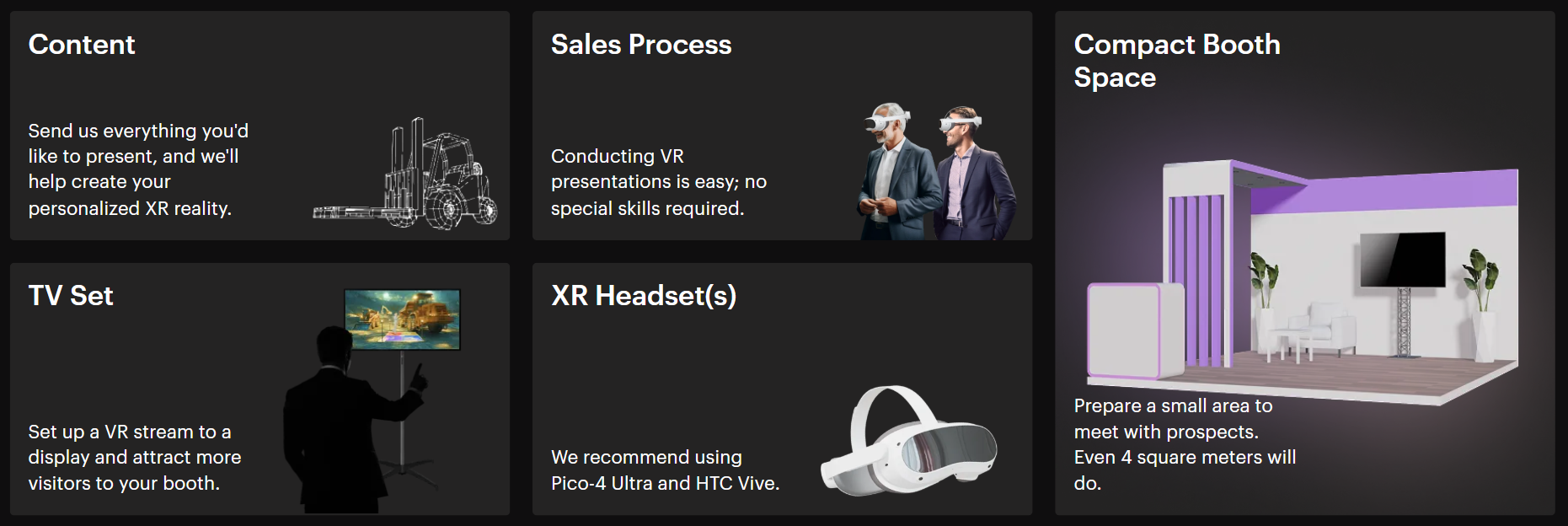
To launch Dream Booth XR, companies need only a small booth area, a VR headset, a screen for visitors, a prepared XR scene, and a person who can guide demonstrations.
The setup process takes only a few minutes. After defining the XR space and loading the required content, the booth is ready for visitors.
For the end user, there is almost no learning curve: they put on a headset and immediately enter the experience while the sales representative controls the presentation flow.
Explainer video:
XR as a Sales Tool, Not Just an Exhibition Attraction
The XR experience does not end when the exhibition closes.
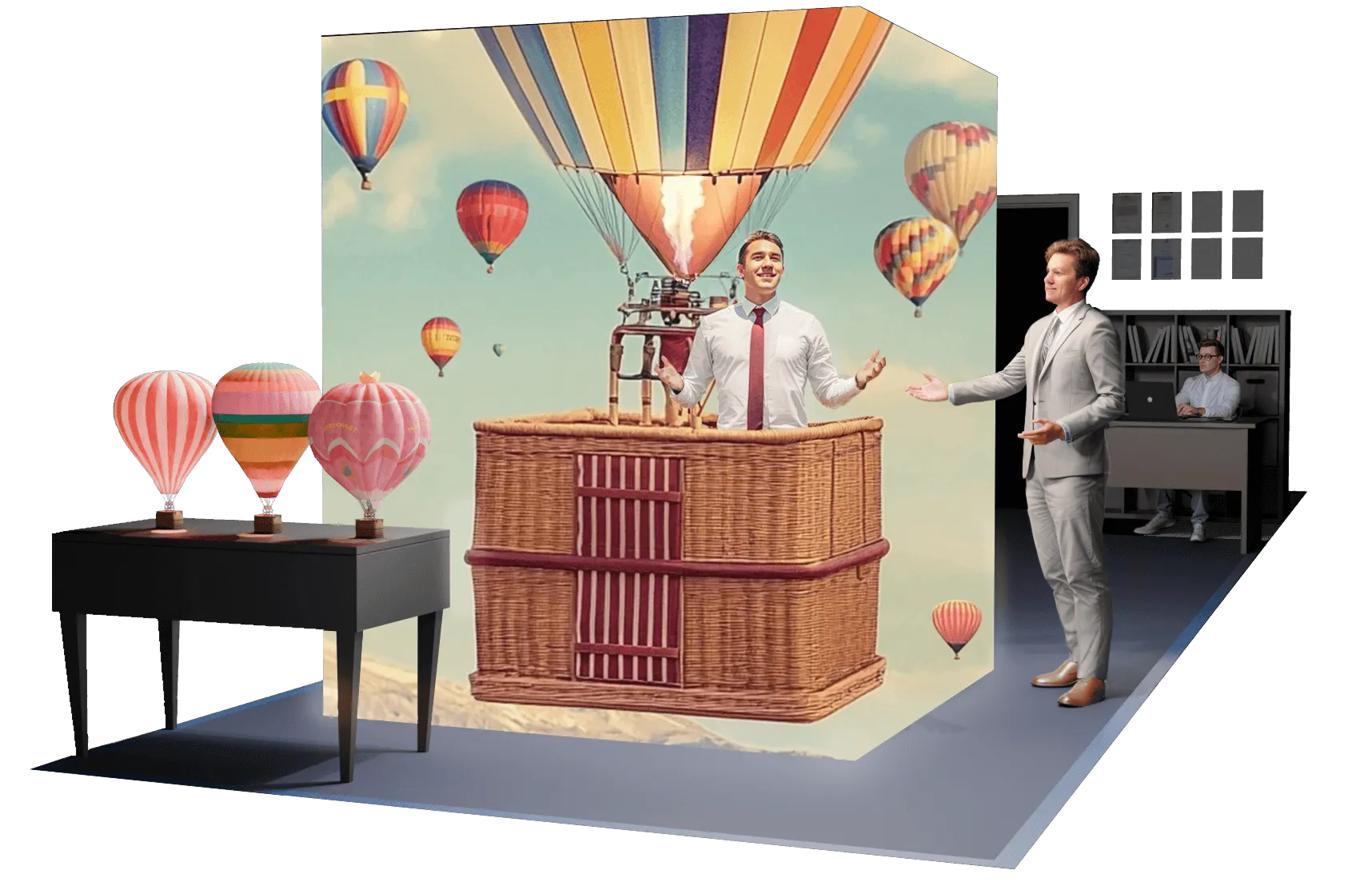
The same XR environment can be reused for sales meetings, customer visits, and presentations in different locations. Content can be updated when products, campaigns, or business goals change.
This turns XR from a one-time exhibition feature into a long-term sales tool.
Better Follow-Up After Every Demo
Trade shows are fast-paced environments. Companies often collect contacts but lose valuable context after the event.
XR can help preserve more information about each interaction. Sessions can be recorded, allowing sales teams to review demonstrations and better understand customer interests.
Bring Your Product Into XR
Every product has a story that needs to be explained, sometimes through scale, sometimes through interaction, sometimes through a better way of visualizing complexity.
Dream Booth XR helps companies transform that story into an immersive experience that fits inside a real exhibition space. Book a free demo and explore how XR can change the way you present your products.
Read about Dream Booth XR: https://jet.style/dreamboothxr