.jpeg)


Gaussian Splatting for Transparent Objects
Since our previous article about exploring 3D Gaussian Splatting (3DGS), the technology has continued to evolve. New workflows, tools, and experiments are expanding the range of objects that can be captured as realistic 3D representations.
At JetStyle, we are interested not only in using emerging technologies, but also in understanding their practical limits: where they already work well, where they fail, and what adjustments can make them more useful.
Together with Ivan Knyazev, JetStyle’s 3D Art Director, we explored a specific challenge: how to create 3DGSs of small and transparent objects, such as gemstones.
This research started from a practical question: can Gaussian Splatting be used for objects that are difficult to capture with traditional 3D scanning methods?
The potential applications go beyond visualization. Realistic digital objects can become tools for product presentation, remote sales, education, and research — allowing users to explore details that are difficult to examine in a traditional format.
In this article, we share what we learned while experimenting with transparent stones, small objects, and different capture techniques.
Why Transparent Objects Are Difficult to Capture in 3D
Traditional photogrammetry is one of the most common approaches for creating 3D models from real objects. The idea is simple: capture many images from different angles, analyze the similarities between them, and reconstruct a 3D surface.
However, photogrammetry has a serious limitation: it works best with stable, clearly visible surfaces.
Transparent and reflective materials create problems because they do not look the same from every angle. Reflections change depending on lighting and camera position. Transparent surfaces reveal different internal structures depending on the viewpoint.
For example, glass or gemstones may appear completely different in two neighboring photographs. A reflection that appears in one frame may disappear in another. For a reconstruction algorithm, this can look like two different surfaces instead of the same object.
Gaussian Splatting approaches the problem differently.
Instead of building a traditional polygon mesh, Gaussian Splatting represents a scene through thousands or millions of small visual elements — splats — that are positioned and optimized based on captured images.
This difference makes Gaussian Splatting applicable for difficult materials. It does not solve every challenge automatically, but it opens possibilities where traditional reconstruction methods struggle.
Can Gaussian Splatting Capture Gemstones?
Gemstones became a challenging test case because they combine several difficult properties:
- small physical size;
- transparency;
- reflections;
- complex internal structures.
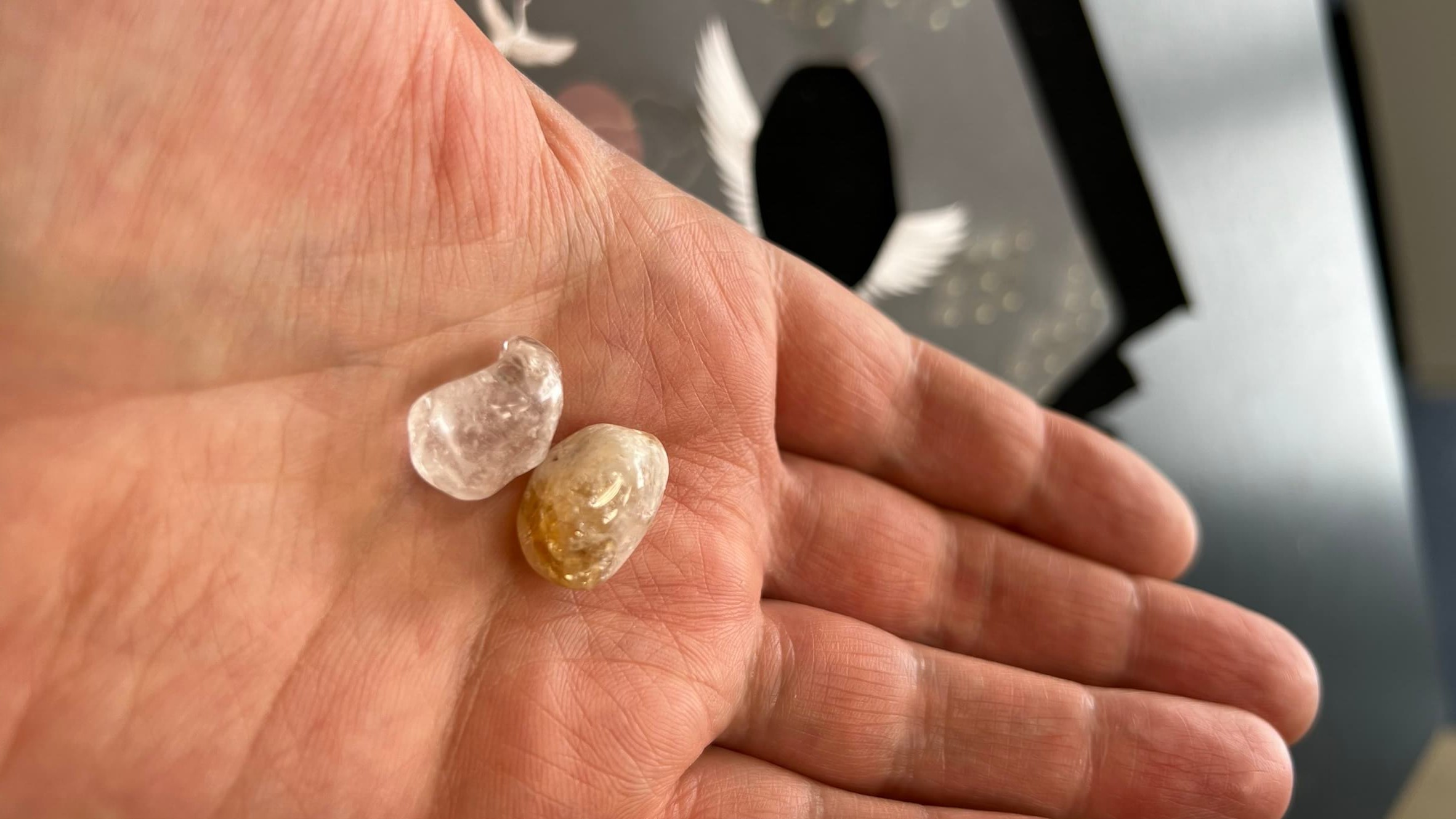
For many stones, their internal details are not imperfections — they are part of the object’s identity and value. Cracks, inclusions, and internal patterns can be important characteristics, as well as price-defining factors.
A realistic digital representation can therefore serve different purposes:
- a detailed product showcase;
- an educational tool;
- a research object;
- an interactive XR experience.
Instead of only looking at a gemstone from one angle, users could potentially explore its structure digitally, examine details, and understand characteristics that are difficult to communicate through traditional images.
Our Gaussian Splatting Workflow for Small Objects
The general workflow for creating Gaussian Splats follows several stages:
- Capturing images or video of the object.
- Preparing camera positions and image data.
- Generating the Gaussian Splat.
- Cleaning and presenting the final result.
For our experiments, we tested different tools and approaches to understand which parts of the workflow have the biggest impact on the result.
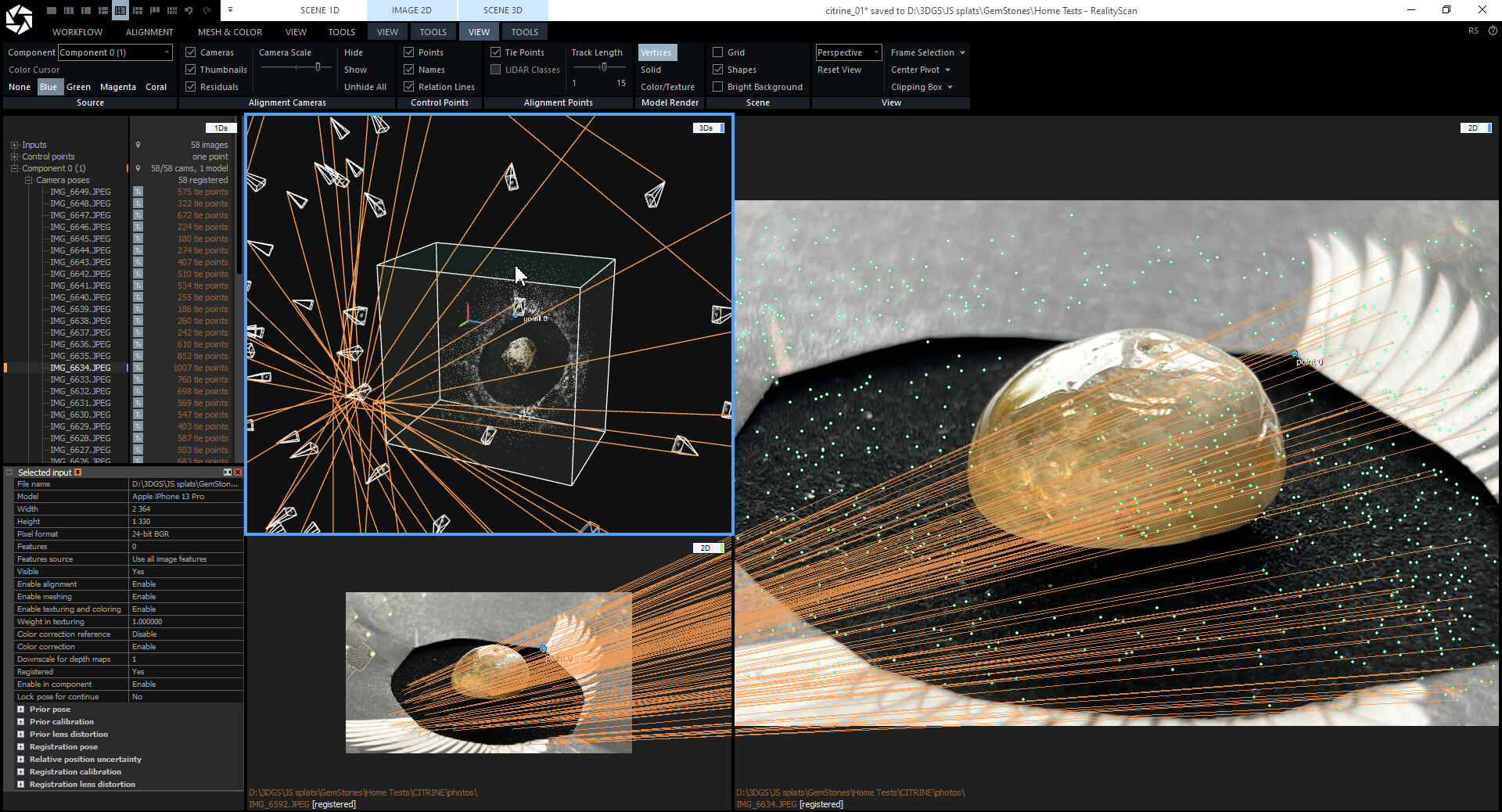
The pipeline included tools such as RealityScan by Epic Games for camera alignment and reconstruction preparation, and Brush for generating Gaussian Splats from prepared data.
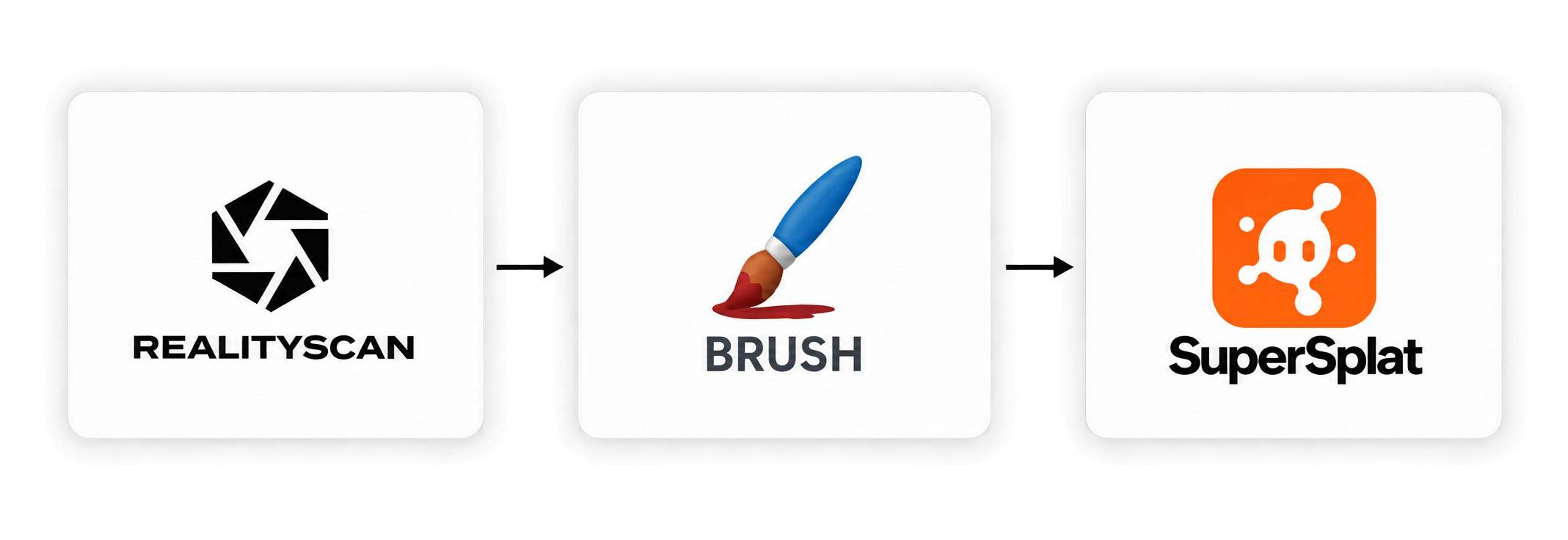
RealityScan helped estimate camera positions and create the necessary information from captured images. The resulting data could then be used for Gaussian Splat generation.
Scan the Environment, Not Just the Object
One of the most important discoveries during testing was that transparent objects require a different capture strategy.
At first glance, it seems logical to focus only on the gemstone itself. But transparent objects constantly change appearance depending on the angle, light, and surrounding reflections.
During experiments, Ivan found that the environment around the object often became the most reliable reference.
Instead of trying to capture only the object, the workflow needs to capture the relationship between the object and its surroundings. The background, surface, and additional visual details help the system understand camera movement and spatial relationships.
The object remains the main subject, but the environment becomes part of the reconstruction process.
Testing the Workflow With Small Objects: The Office Duck Experiment
Before moving deeper into gemstone experiments, we tested the approach on smaller everyday objects.
One of the examples was a set of small toy ducks from our office.
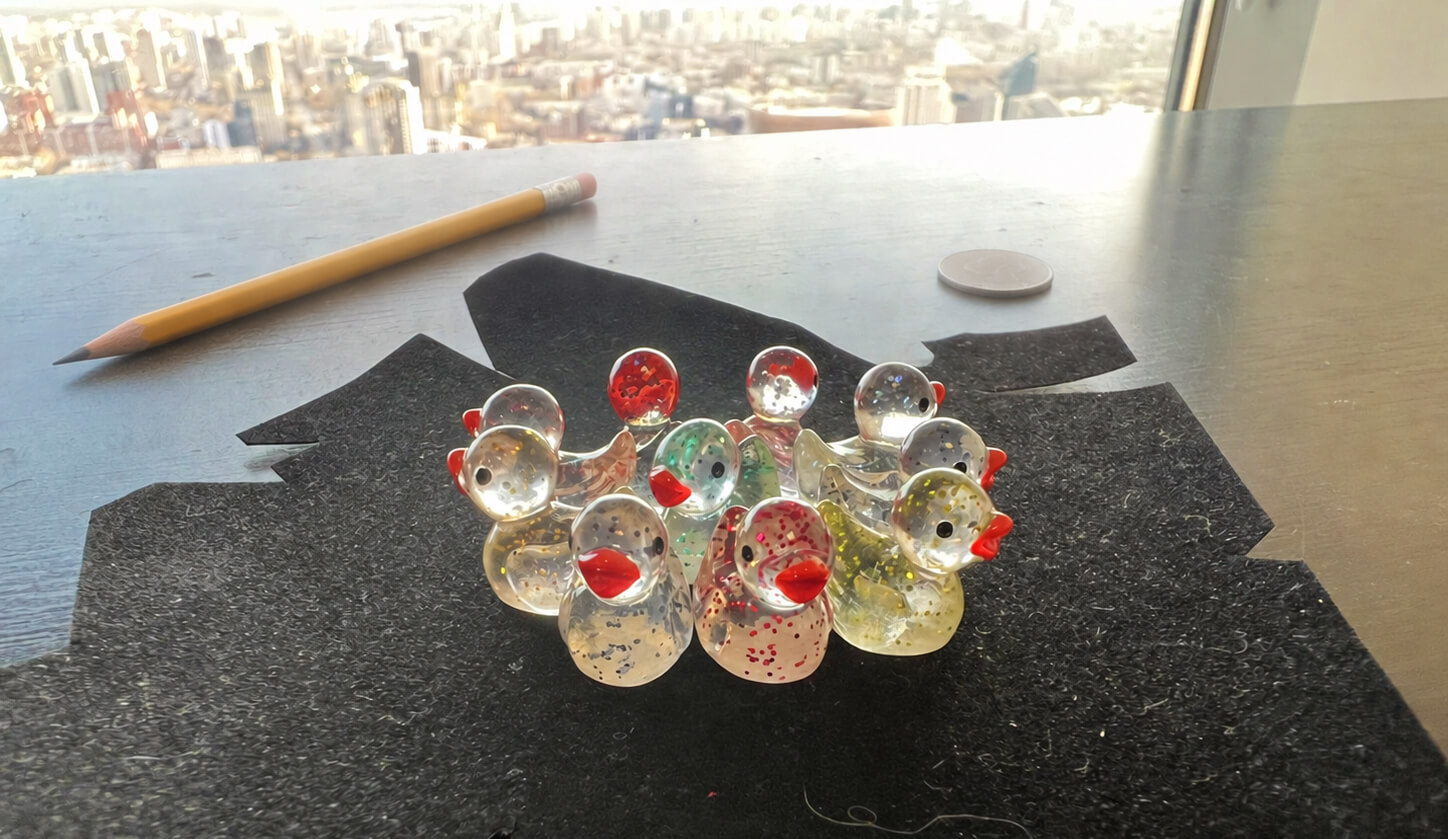
The goal was not to create a production-ready asset, but to understand how small transparent or complex objects behave during capture.
For this experiment, Ivan used a simple setup:
- a smartphone camera;
- around 50 images;
- a stable background surface.
The object was placed on a velvet-like paper surface. This background was useful because it provided additional texture and reference points for the reconstruction process.
Even with a simple setup, the experiment showed that Gaussian Splatting could capture interesting results from small objects.
Designing a Better Marker for Gaussian Splatting
After testing existing objects as references, we moved toward creating custom markers.
The reason is quite simple: a clean gemstone can look almost the same from different angles. To understand which angle a photo was taken from, the reconstruction process needs a reference that changes in a predictable way as the camera moves around the object.
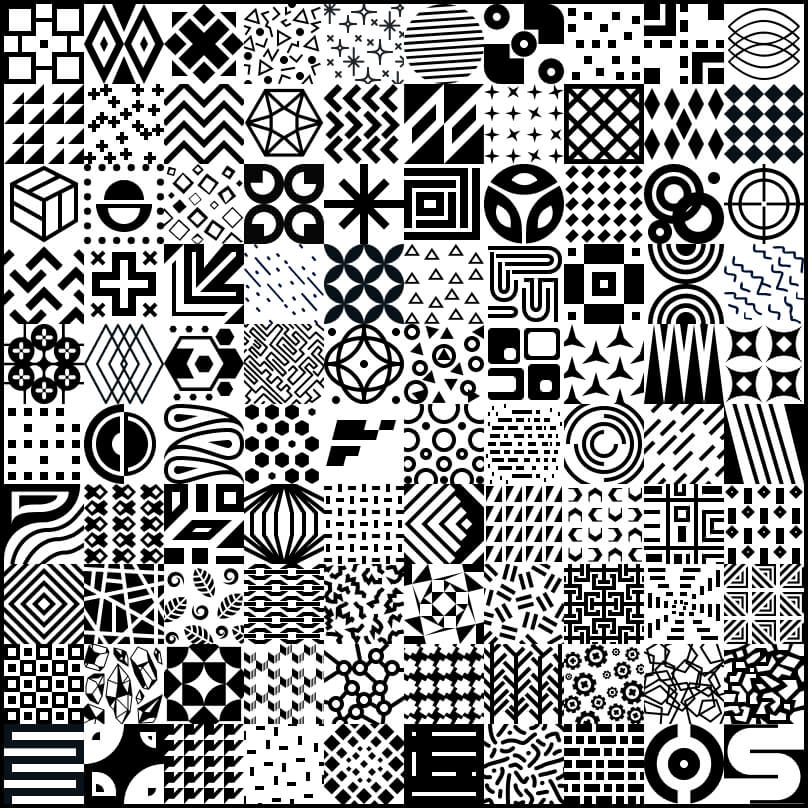
Ivan tested different patterns and found that a useful marker should combine high contrast, larger recognizable shapes, smaller details, and a pattern that does not repeat from one side to another.
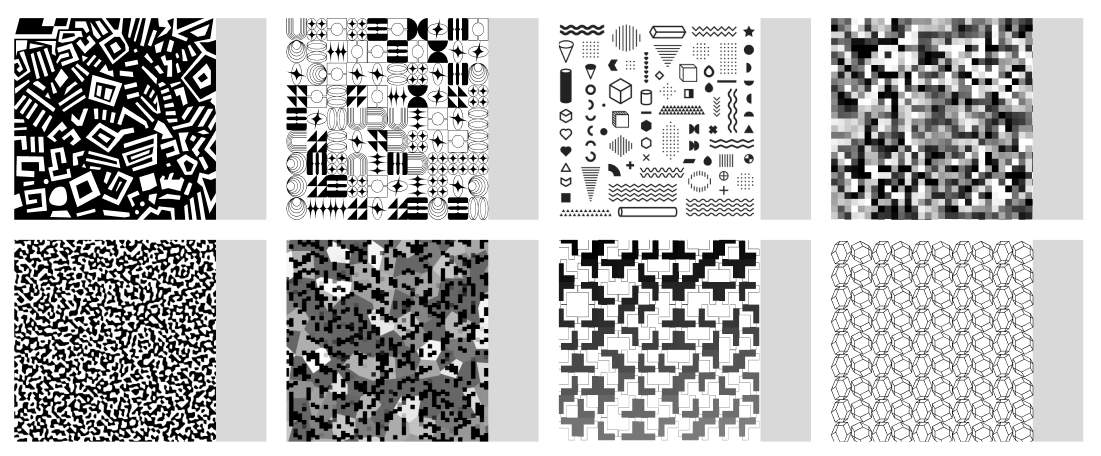
A random image downloaded from the internet could work, but a custom pattern gave us more control over exactly what the system sees from each angle.
Why a Cone-Shaped Marker Worked Better Than a Tube
Another interesting discovery was related to the physical shape of the marker.
We tested two versions of the cone. The first looked more like a skirt around the object, while the second was closer to a dog’s protective collar, extending upward around the gemstone.
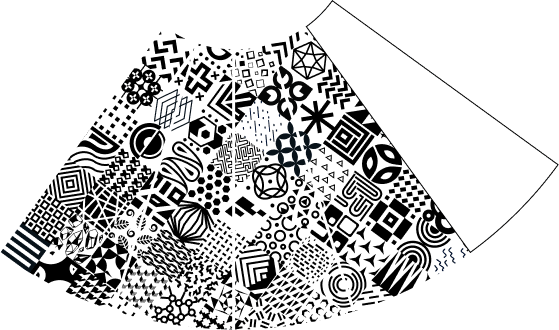
The second version could potentially work better because it keeps more of the marker visible to the camera as it moves around the object. However, it is also harder to attach securely.
There is another optical detail here: when shooting such small objects with a close-up lens, the edges of the frame become increasingly blurred. So the marker needs to occupy enough of the useful area of the image to provide reliable reference points.
The cone shape helps with this. As the camera moves around the object, different parts of the pattern remain visible for longer, creating more overlap between frames and giving the reconstruction process more information to match.
This is a good example of how small physical changes in the capture setup can significantly improve digital reconstruction.
More Images, Better Results
Another factor we tested was the amount of captured material.
Using a rotating table, Ivan compared different numbers of frames captured from the same object. One scan used dozens of images, while another used several hundred frames from a full rotation.
The result was straightforward: for small complex objects, more high-quality views generally improve the final Gaussian Splat.
A smartphone camera is already enough for initial experiments. However, better optics and macro photography can provide significantly more detail.
Ivan also noted that smartphone processing can sometimes reduce useful information by applying automatic sharpening or smoothing.
What We Learned From Gaussian Splatting Transparent Objects
The experiments showed that transparent and reflective objects are not impossible for Gaussian Splatting — but they require a different mindset.
The main lesson is not simply that “Gaussian Splatting works for gemstones.”
The more important insight is that difficult materials require a carefully designed capture process.
The biggest factors are:
- choosing the right environment;
- creating reliable visual references;
- using soft, diffused lighting rather than strong direct light, because the goal is to capture the gemstone’s internal structure rather than emphasize surface reflections;
- capturing enough viewpoints.
Gaussian Splatting is not a magic button that turns any object into a perfect digital copy. The quality of the result depends heavily on how the object is prepared and captured.
Why Gaussian Splatting Matters for XR and Digital Experiences
Gaussian Splatting is often discussed in relation to large environments: buildings, landscapes, and real-world spaces.
But small objects reveal another interesting direction.
Detailed digital captures can help create:
- interactive product showcases;
- educational experiences;
- virtual collections;
- XR demonstrations;
- research and training tools.
A gemstone can become more than an image on a website. A physical object can become an interactive digital experience.
This is where Gaussian Splatting becomes especially interesting for XR: it creates new ways to present and explore things that were previously difficult to digitize.
Want to Explore Gaussian Splatting for Your Project?
At JetStyle, we experiment with emerging XR technologies to understand where they create real practical value.
If you have an object, product, or environment that is difficult to visualize using traditional 3D methods, we can help explore whether Gaussian Splatting, photogrammetry, or another XR workflow is the right approach.
Write to us at orders@jet.style — and let’s discuss how advanced 3D capture can support your next digital experience.